My Learning Journey - Internet of Things (IoT)
From simple sensor inputs to mobile-controlled smart devices.
← Back to PortfolioDay 1
IoT FundamentalsControlling an LED with a Microcontroller
My IoT journey began with the "Hello, World" of embedded systems: controlling a simple LED. I learned the foundational concepts of an IoT device's core components—a microcontroller (like Arduino or ESP32), a breadboard, and basic circuit wiring. I wrote and uploaded a program to make the LED blink, understanding how to control digital output and the importance of a current-limiting resistor.
Key Learnings:
- Introduction to microcontrollers and their role in IoT.
- Basic circuit components (LED, resistor, breadboard).
- Digital input/output and simple programming logic.
- Setting up the development environment (e.g., Arduino IDE).
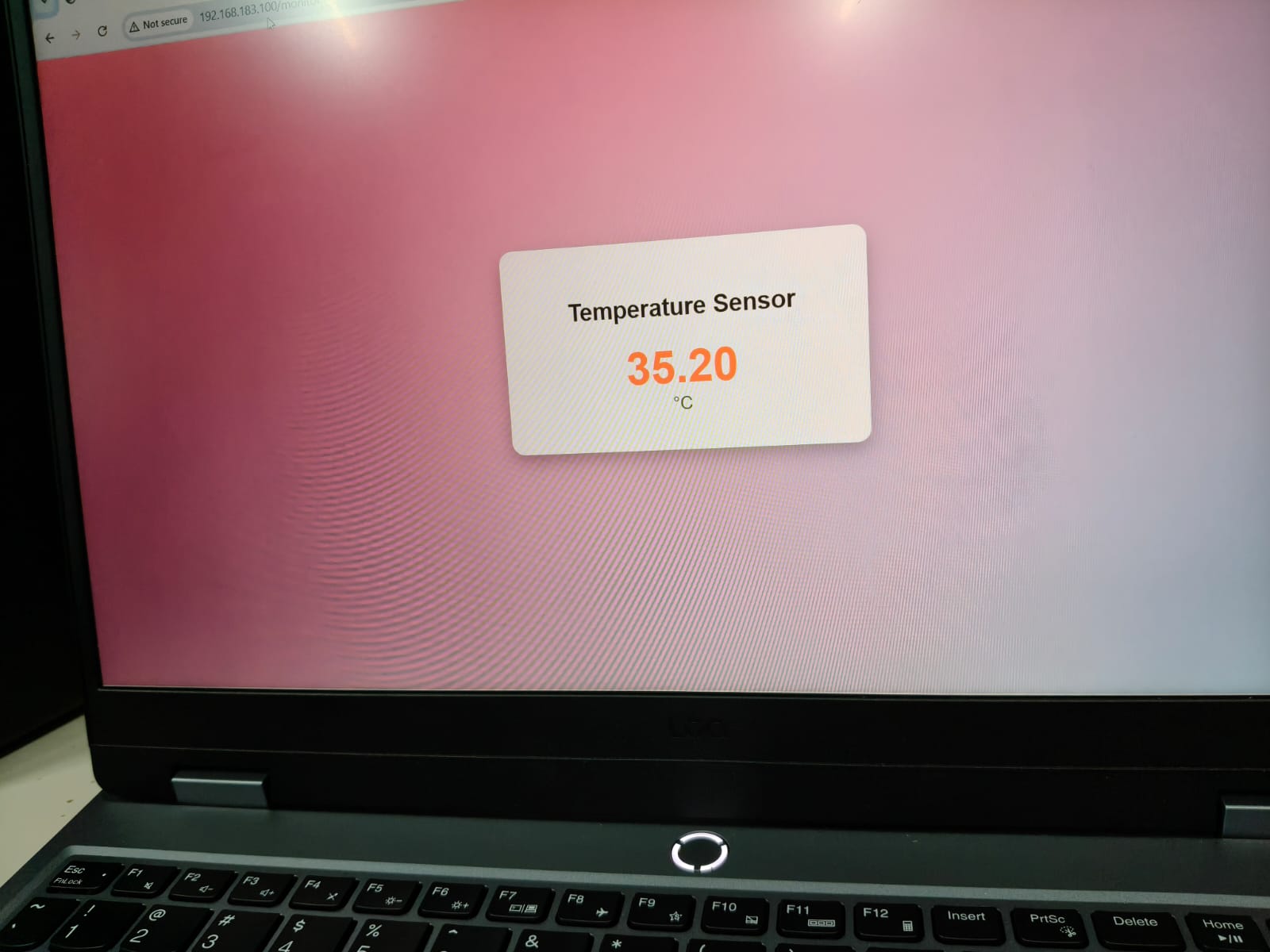
My first step into the world of physical computing.
Day 2
Sensors & DataDistance Measurement with an Ultrasonic Sensor
On the second day, I moved from output to input by integrating an **ultrasonic distance sensor**. I learned how this sensor measures distance by emitting a sound wave and calculating the time it takes for the echo to return. I connected the sensor to the microcontroller and wrote a program to read the raw time data, convert it into a distance measurement in centimeters, and display the result. This project solidified my understanding of how devices can sense their environment and acquire data.
Project Steps & Skills Developed:
- Understanding how ultrasonic sensors work.
- Interfacing the sensor with the microcontroller.
- Programming the microcontroller to read sensor data.
- Performing calculations to convert time to distance.
- Displaying data on a serial monitor or a small screen.
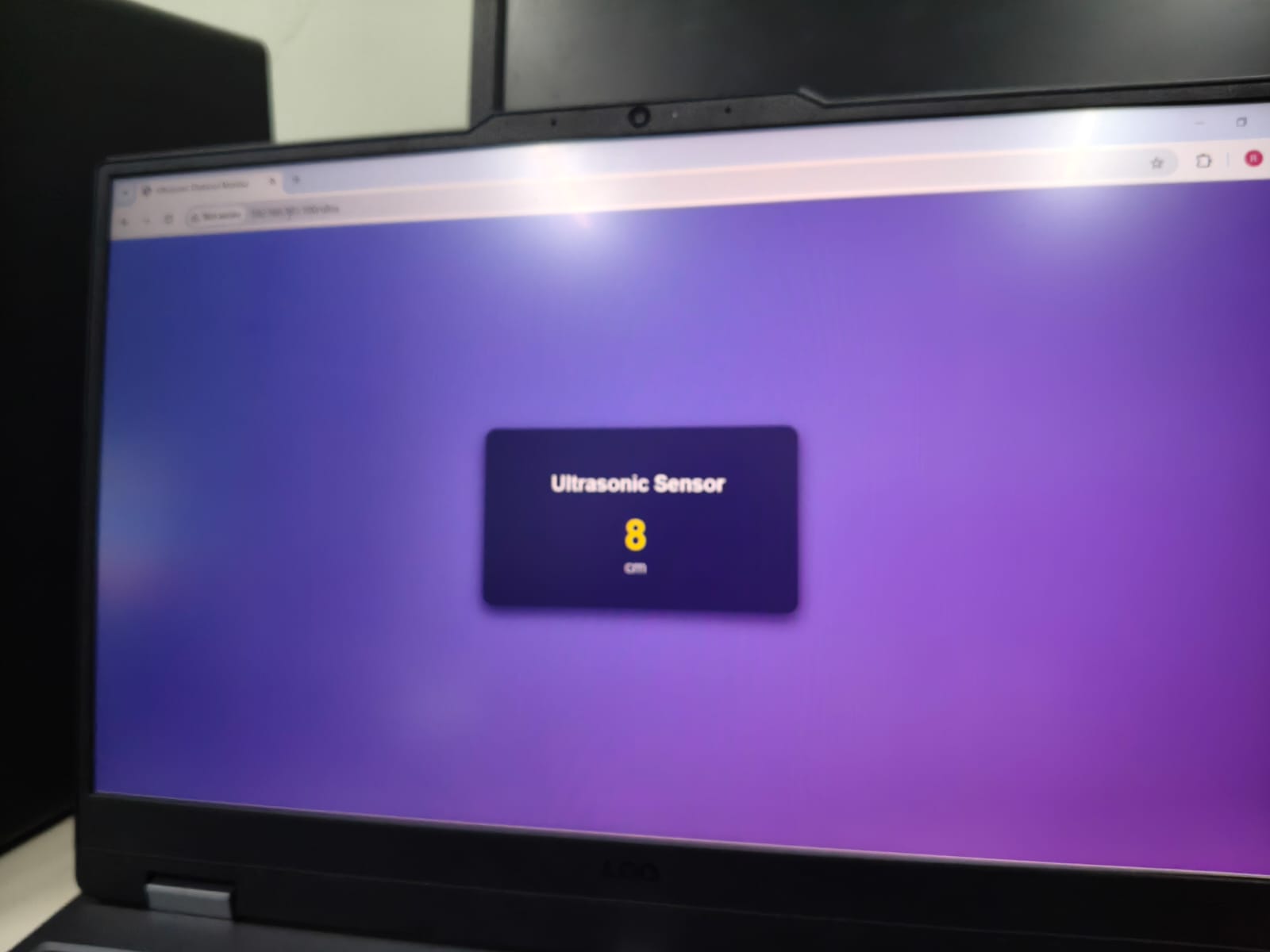
The ultrasonic sensor module, ready to detect objects.
Day 3
Advanced IoTMobile-Controlled RGB Color Sensor
The final day brought everything together by connecting my device to the "Internet." Using an ESP32 microcontroller with built-in Wi-Fi, I created a simple web server that could be accessed from my phone. I wrote a program to receive color values (Red, Green, Blue) from the mobile browser and use **Pulse Width Modulation (PWM)** to control the brightness of an RGB LED, making it change to any color. This project demonstrated the true power of IoT: remote control and interaction.
Project Steps & Skills Developed:
- Wi-Fi connectivity and setting up a web server on the device.
- Receiving HTTP requests with data from a mobile browser.
- Controlling an RGB LED using PWM.
- Building a full-stack IoT application.
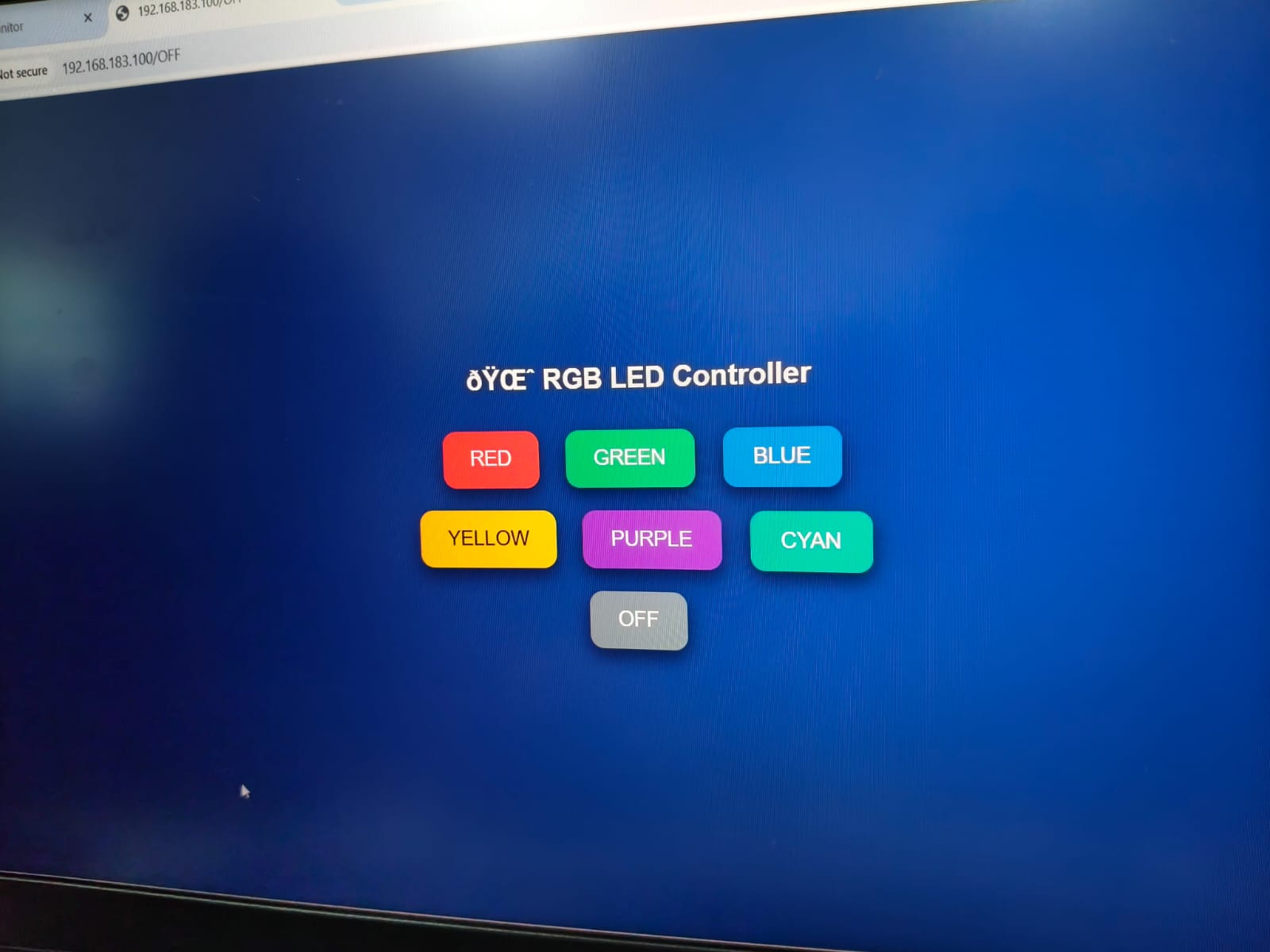
Controlling the RGB LED color from a mobile phone browser.